1. Get an SSL Certificate:
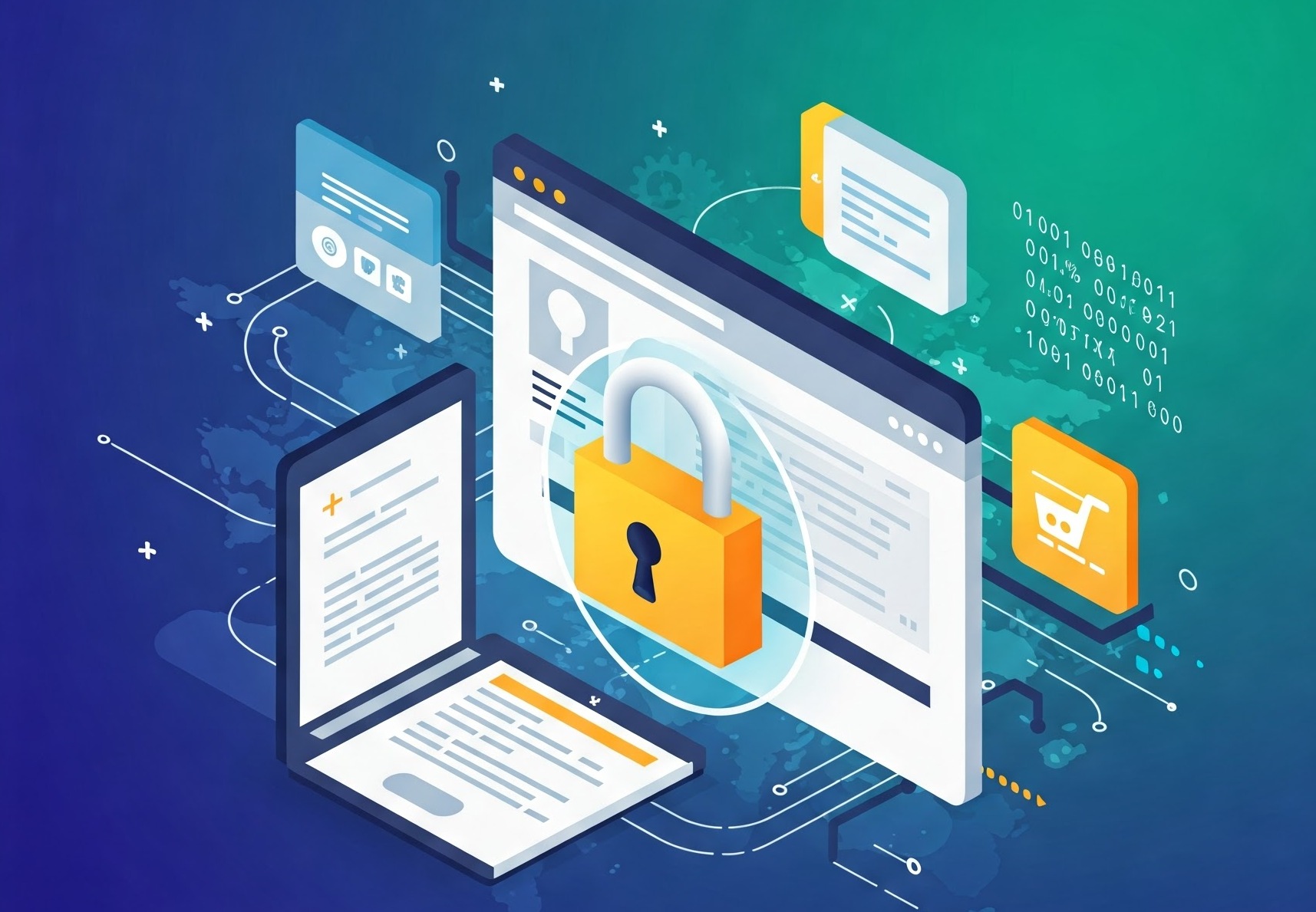
Think of an SSL certificate as a secure tunnel between your website and your customers’ browsers. It encrypts the information they share, like credit card numbers, so no one can snoop on it. Look for “HTTPS” and a padlock in the address bar – that means your site is secure. This is a must-have, no exceptions.
2. Use Strong Passwords and Two-Factor Authentication:
Make sure everyone who has access to your website (including you!) uses strong passwords – a mix of uppercase and lowercase letters, numbers, and symbols. Even better, use two-factor authentication. This means that even if someone guesses your password, they’ll need a code sent to their phone to log in.
3. Keep Everything Updated:
Outdated software is like an open door for hackers. Make sure your online store’s platform, plugins, and everything else is updated with the latest security patches. This closes those security holes that hackers love to exploit.
4. Regularly Check for Weak Spots:
Regular security checks and penetration testing are like having a security expert try to break into your site. They simulate real attacks to find any weaknesses before hackers do. Then, you can fix those weaknesses.
5. Use a Web Application Firewall (WAF):
A WAF is like a bodyguard for your website. It monitors traffic and blocks anything suspicious, like common hacking attempts.
6. Protect Your Database:
Your database is where all your customer info lives, so it needs extra protection. Use strong passwords, limit who can access it, and back it up regularly. Encrypting it is even better.
7. Follow PCI DSS Rules:
If you take credit card payments, you have to follow the Payment Card Industry Data Security Standard (PCI DSS). These are rules designed to protect credit card information.
8. Train Your Team:
Your employees are your first line of defense. Teach them about online security, like how to spot phishing emails and avoid clicking on dodgy links.
9. Choose a Secure Hosting Provider:
Your hosting provider is the foundation of your website’s security. Choose one that offers strong security features like firewalls and regular backups.
10. Keep an Eye on Things:
Regularly check your website for anything unusual, like strange login attempts or sudden traffic spikes. Catching problems early can limit the damage.